Brake Noises Decoded: Squeal, Grind, Pulse, and a Soft Pedal
Your brakes usually warn you before they fail, and each warning sounds or feels a little different.
October 14, 2026 · 3 min read
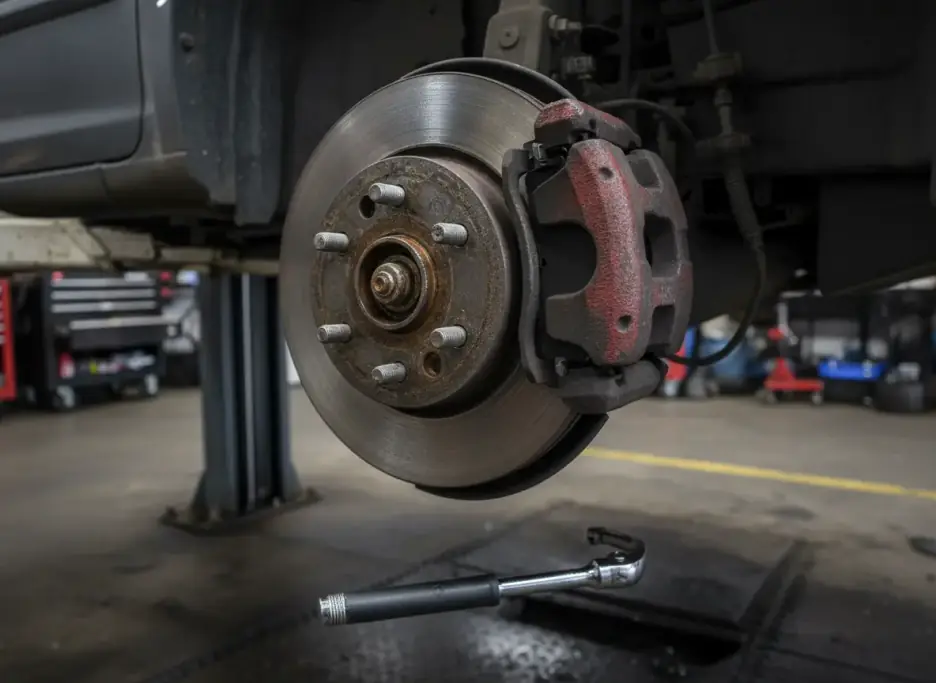
Brakes talk before they fail
Brakes rarely quit without saying something first. Most of the time the car gives you a noise, a feel in the pedal, or a shake in the steering wheel, and each one points to a different problem. Learning which is which helps you decide how fast to act. Some of these you can schedule for next week. A few mean you should stop driving.
The squeal
A high squeal when you press the pedal is the most common brake noise and often the least scary. Many brake pads have a small metal tab built in. When the pad material wears down to a certain point, the tab touches the rotor and squeals on purpose. It's a built-in reminder that the pads are getting thin.
Not every squeal means that. Light surface rust after a damp night can squeal for the first few stops and then go quiet. Dust, glazed pads, or dry hardware can do it too. The test is consistency. A squeal that shows up every time you brake, day after day, deserves a look. Don't wait for it to turn into the next noise on this list.
The grind
A deep, rough grinding sound under braking is a different animal. It usually means the friction material is gone and the metal backing plate of the pad is scraping the rotor. That's metal on metal. It chews up rotors fast, makes the car harder to stop, and turns what could have been a pad job into a bigger repair.
Once in a while a small stone or bit of debris gets caught behind the dust shield and makes a scraping sound that goes away on its own. But you can't tell the difference from the driver's seat, so treat a grind as a reason to get the car checked soon, and drive gently until you do.
The pulse
If the brake pedal pulses under your foot, or the steering wheel shakes when you slow down from highway speed, the rotors are the first suspect. People call this warped rotors. More often the rotor surface has uneven thickness or deposits on it, so the pads grab harder in some spots than others as it spins. A sticking caliper can cause something similar by overheating a rotor.
A pulse is usually not an emergency, but it's not something to live with either. It wears parts unevenly and makes the car less steady in a hard stop.
The soft pedal
This is the one that matters most. A pedal that feels spongy, sinks slowly toward the floor, or goes lower than it used to means something is wrong on the hydraulic side of the system. Air in the lines, low fluid, a leak at a hose or a caliper, or a worn master cylinder can all do it.
If the pedal sinks to the floor or you've lost braking you can count on, don't drive the car. Have it towed. It isn't worth the risk. You can also look at the brake fluid reservoir under the hood. A level that has dropped well below the marks is a clue that fluid is going somewhere it shouldn't.
Other signs worth reporting
Noise isn't the only way brakes tell you something is off. Mention any of these when you call the shop:
- The car pulling to one side when you brake.
- A burning smell after a long downhill stretch or heavy stopping.
- The brake warning light on the dash.
- One wheel noticeably hotter than the others after a drive.
- A parking brake that feels loose or doesn't hold.
- A pedal that has gradually changed its feel over a few weeks.
What a real brake check looks like
A proper inspection means the wheels come off. The tech measures how much pad is left, looks at the rotor surfaces, checks that the calipers slide freely, inspects the hoses for cracks or bulges, and looks at the fluid. Without that, anybody quoting you a brake job is guessing.
When you get the results, ask the tech to explain what was found and what's urgent versus what's coming up later. Pads that are thin but safe for now are a different conversation than pads worn down to the metal. You should come away knowing which is which.
If your brakes are making noise, or the pedal just doesn't feel right, bring the car to 311 Garage at 2110 Old Orems Road in Middle River, or call (410) 238-0311 and describe what you're hearing. Brakes are one of the shop's core services, and the sooner someone looks, the more options you have.
311 Garage LLC, 410-238-0311
Call 410-238-0311More articles
What Your Check Engine Light Is Actually Telling You
The light tells you something is off, and a good diagnosis tells you what.
Failed Your Emissions Test? What to Bring and What Happens Next
A failed test is information, and the repair visit goes better when you show up with the right paperwork and a few details.