What Your Check Engine Light Is Actually Telling You
The light tells you something is off, and a good diagnosis tells you what.
October 14, 2026 · 4 min read
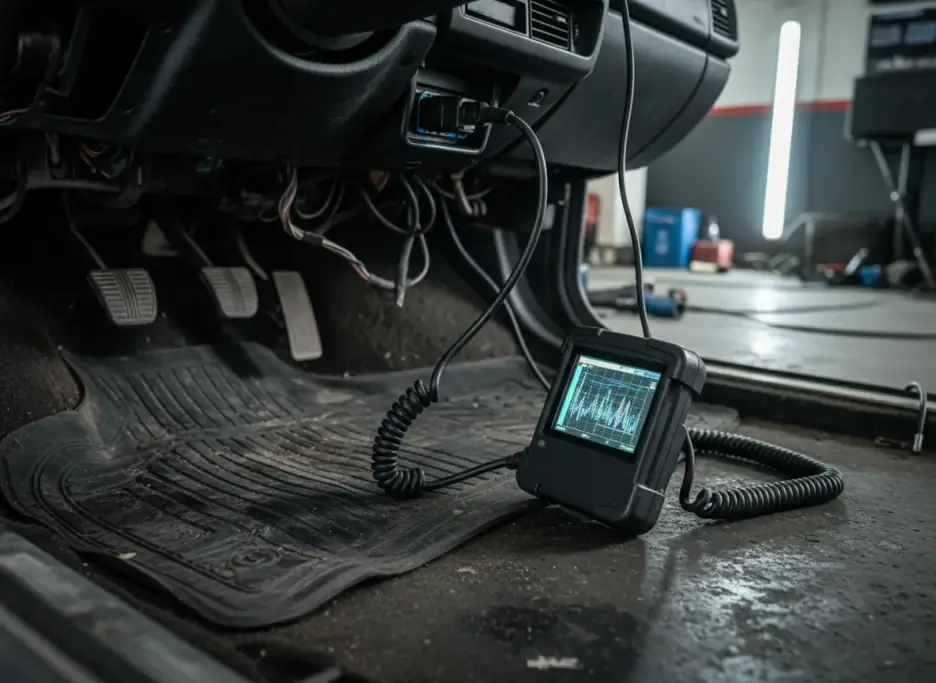
A smoke alarm, not a diagnosis
A check engine light means the car's computer noticed a reading outside the range it expects. That's the whole message. It doesn't say what broke, how serious it is, or whether you can drive another week. Think of it like a smoke alarm in the hallway. It tells you to go look. It doesn't tell you whether you burned the toast or the kitchen is on fire.
Your car watches a long list of things all day: how much air is coming into the engine, how much oxygen is left in the exhaust, whether the cylinders are firing evenly, how the emissions equipment is behaving. When a reading stays off for long enough, the computer saves a trouble code and switches the light on. The code is a note about which circuit or reading looked wrong. It is not a note about which part to buy.
Steady light or flashing light
This is the one difference worth remembering. A steady light means a problem was logged and you should get the car looked at soon. A flashing light usually means the engine is misfiring hard. Unburned fuel can get into the exhaust and overheat expensive parts, so a flashing light is the one that costs you more with every mile you keep driving.
- Steady light and the car drives normally: book a visit in the next few days and keep an eye on it.
- Steady light with rough running, a loss of power, or a strange smell: don't wait, get it in.
- Flashing light: ease off the throttle, avoid hard acceleration, and get the car checked as soon as you safely can.
- Light plus a temperature or oil pressure warning: pull over somewhere safe and shut the engine off.
A code is a starting point, not a verdict
Say a scan comes back with a code for a lean fuel mixture. A lot of people read that and decide they need a new sensor. But a lean reading can come from a vacuum leak, a dirty airflow sensor, a weak fuel pump, a clogged filter, or an oxygen sensor that is accurately reporting a real problem somewhere else. The code points at the neighborhood. It doesn't name the house.
That's why parts-swapping gets expensive. If someone reads the code and replaces whatever part the code's name mentions, you can pay for something that was never bad and watch the light come back a week later. Real diagnosis uses the code to decide where to test, then does the testing: looking at live sensor data, checking wiring and connectors, inspecting hoses, and confirming the fault before anything gets replaced.
A free code read at a parts store is fine for getting a rough idea. Just treat what you get as a clue, not as a repair order.
Causes that come up a lot
We can't tell you what's wrong with your particular car from here, but some causes are common enough to be worth knowing about.
- A loose, worn, or missing gas cap that lets fuel vapor escape.
- Oxygen sensors that have aged and respond slowly or not at all.
- Worn spark plugs or weak ignition coils that cause misfires.
- A dirty airflow sensor or a vacuum leak that upsets the air and fuel balance.
- Emissions parts, such as the catalytic converter or the pieces that seal the fuel vapor system.
- Low battery voltage or a charging system that is struggling.
The gas cap is the cheap one to check first. If the light came on right after a fill-up, make sure the cap clicked tight. Sometimes the light clears itself after a few days of driving. If it was already on before you fueled up, the cap probably isn't your answer, so don't wait around for a miracle.
What to tell the shop
The more you can say about what the car was doing, the faster a good tech can narrow the search. You don't need technical words. You just need to remember what you noticed.
- When the light first came on, and anything unusual that day, like fueling up, a deep pothole, or driving through standing water.
- Whether it stays on steady, flashes, or comes and goes.
- Any change in how the car drives: hesitation, a rough idle, poor fuel mileage, or hard starting.
- Any other warning lights that were on at the same time.
Intermittent problems are the hardest to chase, so if the light comes and goes, say so. That's a clue too.
Don't ignore it, and don't panic
Plenty of people live with a lit check engine light for months because the car seems fine. The trouble is that a light that is already on can't warn you about the next problem. You lose your early warning. A small fault left alone can also lead to a bigger one, especially a misfire or a fuel mixture problem that keeps running for a long stretch.
On the other side, a steady light on a car that drives fine is not an emergency. Get a real diagnosis, ask what was found and why, and decide what to fix first. A good shop will tell you which items are urgent and which can wait.
If your light is on, 311 Garage at 2110 Old Orems Road in Middle River does diagnostics and check engine light work. Mike is an ASE Master Automotive & Truck Technician, and the shop has been in business since 2002. Call (410) 238-0311 and tell us what the car has been doing.
311 Garage LLC, 410-238-0311
Call 410-238-0311More articles
Failed Your Emissions Test? What to Bring and What Happens Next
A failed test is information, and the repair visit goes better when you show up with the right paperwork and a few details.
Brake Noises Decoded: Squeal, Grind, Pulse, and a Soft Pedal
Your brakes usually warn you before they fail, and each warning sounds or feels a little different.